
Marine filters are the components standing between every contamination source your vessel encounters and the precision equipment that keeps it under way. A wrong micron rating does not just shorten filter life. It delivers abrasive contamination directly to your injectors, bearings, servo valves, and cylinder liners. On Gulf commercial vessels, where ambient temperatures exceed 45°C in summer, seawater reaches 35°C, and sand-laden Shamal winds deposit fine particulate across intake systems and tank breathers, filtration is not a consumable afterthought. It is the primary reliability system in the engine room.
For chief engineers and superintendents managing multi-brand engine rooms across Caterpillar, MAN, Wärtsilä, and Yanmar platforms, filtration strategy must be unified across four categories: fuel, lube oil, air intake, and hydraulic and coolant. Each category addresses a specific contamination profile, and each requires specific micron ratings, flow capacities, and service intervals adjusted for Gulf operating conditions. This pillar guide covers all four categories, provides a brand cross-reference for the filter brands we stock and supply, and links to our detailed subtopic guides on fuel filter micron ratings and general engine filter types and replacement.
Why Filtration Is the First Line of Defense Onboard
Filtration is the first line of defense because every other maintenance decision depends on clean fluids and clean air reaching the components they protect. If fuel carries cat fines past the secondary filter, injector nozzles score within hundreds of hours regardless of how carefully you planned your injection system overhaul. If lube oil passes 20-micron wear particles because the full-flow element is loaded past its effective life, bearing clearances open up and crankshaft deflection follows. If salt-laden air bypasses a damaged intake element, turbocharger compressor wheels erode and combustion efficiency drops. The filter is the gatekeeper. Everything downstream assumes it is doing its job.
The Gulf operating environment compresses every filter service interval and amplifies every contamination risk. Fuel oxidizes faster at 45°C ambient, producing gums and varnish that coat media and reduce effective flow area. Salt spray enters fuel tanks through breathers and sounding tubes, accelerating internal corrosion that generates rust particles loading primary fuel filters. Microbial growth at the fuel-water interface runs significantly faster in warm Gulf day tanks than in temperate waters. These conditions mean that OEM filter intervals published for nominal operating environments are upper bounds, not targets, for Gulf fleets.
The selection framework across all four filtration categories follows the same logic: identify the contamination source, specify the micron rating that protects the downstream component, size the element for actual circuit flow rate, and adjust the service interval for Gulf conditions. For the broader treatment of all filter types including separator elements, seawater strainers, and bilge treatment, see our marine engine filters guide, which covers replacement triggers and maintenance best practices in depth.
Fuel Filtration: Managing Sulfur, Water, and Microbial Contamination
Fuel filtration is the highest-stakes category on any commercial vessel. A modern common-rail injection system operating at 2,000+ bar has internal clearances measured in single-digit microns. Any particle that passes the secondary fuel filter reaches those clearances at injection pressure, scoring nozzle seats and eroding pump plungers within hundreds of hours. In Gulf service, the contamination profile is amplified by high-sulfur residual fuels on scrubber-equipped vessels, warm distillate storage that accelerates microbial growth, and variable bunkering quality across regional ports.
Primary vs. Secondary Fuel Filter Requirements
Primary fuel filters operate at 10 to 30 microns and handle coarse particulate capture plus water separation. The primary stage protects the secondary filter from premature loading and removes free water that would otherwise saturate fine media downstream. On Cat 3406, 3412, C18, and C32 marine engines, the primary assembly typically includes a water-separation bowl with drain valve and sensor. The primary element must be sized for total fuel circuit flow including return flow, not just engine consumption. A primary filter rated for 200 liters per hour on an engine whose fuel circuit moves 500 liters per hour will load prematurely and trigger bypass alarms long before the element reaches its nominal service life.
Secondary fuel filters operate at 2 to 10 microns absolute. Modern common-rail systems require 2 to 5 micron absolute filtration. MAN four-stroke engines specify secondary filtration matched to injection equipment clearances, with fuel quantity controllers and injection nozzles operating at clearances measured in single-digit microns. A 10-micron nominal element on a common-rail engine is not adequate protection. It is a deferred failure. Always confirm whether the published micron rating is nominal or absolute before accepting a cross-reference element.
Sulfur, Water, and Microbial Risks in Gulf Fuel
Vessels equipped with exhaust gas cleaning systems can burn high-sulfur HFO in Gulf waters. High-sulfur fuel combined with trace water produces sulfuric acid that attacks filter housings, seals, and injection components. Stainless steel housings and chemically compatible seal materials are mandatory in this service. For HFO systems, catalytic fines (aluminum and silicon oxide particles from refinery cracking, typically 1 to 5 microns with Mohs hardness of 7 to 8) require effective centrifuging followed by fine filtration. ISO 8217 limits cat fines to 60 mg/kg, but even at that level, fines reaching injectors after incomplete centrifuging destroy nozzle spray patterns within hundreds of hours.
For distillate fuels (MGO, ULSFO), the dominant threat is microbial contamination. Bacteria and fungi thrive at the fuel-water interface, particularly in warm fuel stored in partially filled day tanks. In Gulf service, where fuel temperatures regularly sit above 40°C, microbial growth rates are significantly higher than in temperate waters. The resulting biomass clogs filters rapidly and generates corrosive byproducts that attack tank coatings and fuel system metals. Apply biocide treatment proactively, drain water from service tanks regularly, and replace primary elements after any microbial contamination event.
Flow Rate Sizing
Fuel filter flow capacity must exceed the engine’s maximum consumption rate with margin for recirculation and return flow. A Caterpillar 3516C marine engine at full load consumes approximately 600 liters per hour. The filter assembly must handle that plus return flow, which can double total throughput depending on system design. An undersized filter produces high differential pressure, triggers bypass, and delivers unfiltered fuel to the injection system. Always specify the filter assembly’s rated flow against the engine’s total fuel circuit demand, not just consumption.
For detailed micron selection, flow-rate calculations, and Gulf-specific failure modes including a full Gulf contamination risk table, see our marine fuel filter micron ratings guide. It covers primary and secondary filtration for Caterpillar, MAN, and Wärtsilä platforms with adjusted Gulf service intervals and real-world interval compression data.
Lube Oil Filtration and Service Interval Planning
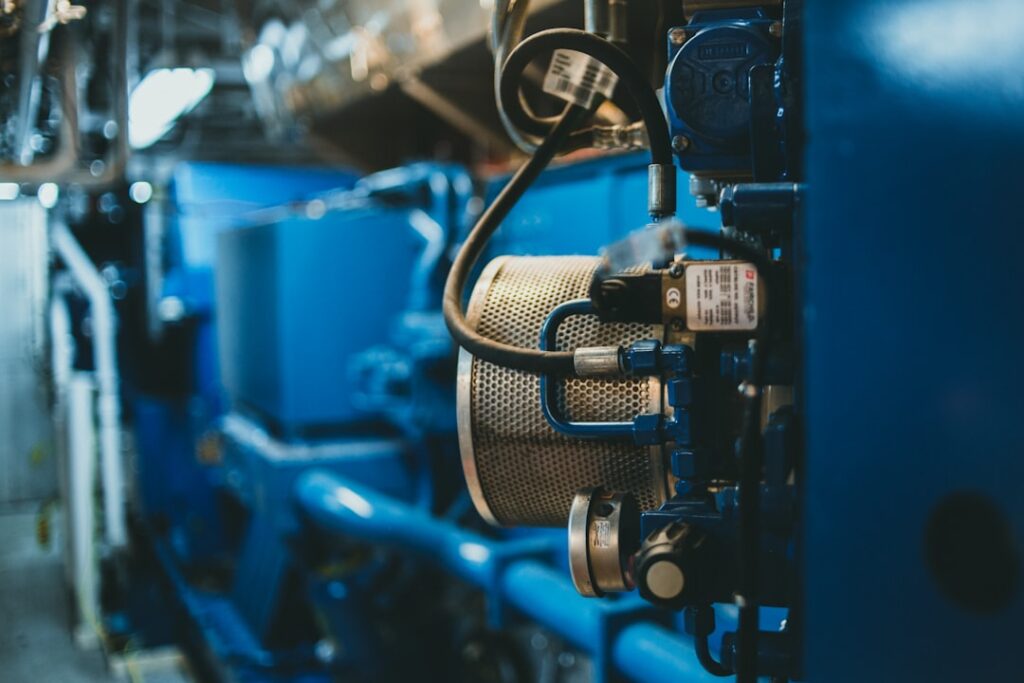
Lube oil filtration determines bearing life, turbocharger reliability, and the interval between major overhauls. Full-flow filters protect the engine continuously by removing soot, sludge, varnish precursors, and metallic wear particles from circulating oil. Bypass filters clean a smaller sidestream more finely and return it to the sump. On medium-speed four-stroke engines, the combination of full-flow and bypass filtration maintains oil cleanliness at the level required for extended bearing and ring life.
Micron Ratings and Bypass Strategy
Full-flow lube oil filters typically operate at 10 to 40 microns. The full-flow element must balance filtration efficiency against flow capacity, because restricting oil flow to the bearings is more immediately dangerous than passing a 20-micron particle. Bypass filters operate at finer ratings, often 5 to 10 microns, and can use denser media because they process a smaller volume. Wärtsilä’s published bypass filtration data for four-stroke engines shows element lifetimes up to 1,500 hours in the stated application, with filtration performance for particles at and above 10 microns. That illustrates how filtration design directly affects service strategy.
Differential Pressure Monitoring
MAN Energy Solutions documents differential-pressure monitoring on automatic lube-oil filters to indicate clogging condition and protect filter cartridges. This is not a passive consumable. Filter condition is a monitored equipment parameter tied to alarm management and planned maintenance. On vessels with planned maintenance systems, differential pressure trends should be recorded at every watch handover. When differential pressure reaches 70% of the alarm threshold, schedule the next element change at the next port call rather than waiting for full hours.
Gulf-Adjusted Service Intervals
OEM lube oil filter intervals are baseline recommendations for nominal conditions. In Gulf service, oil oxidation rates accelerate at 45°C ambient, and dust ingress through crankcase breathers and ventilation systems adds abrasive loading that the OEM did not assume. Shorten full-flow filter intervals by 20 to 30% during summer months, and monitor oil analysis trends for rising wear-metal content that indicates the filter is passing contamination it should be capturing. If iron, chromium, or aluminum trends rise while differential pressure remains stable, the element media may be compromised or the bypass valve may be passing unfiltered oil.
For Cat-specific lube oil filter part numbers and arrangement-number discipline, see our Caterpillar marine engine spares guide covering the 3406, 3412, C18, and C32 platforms. For MAN two-stroke vs. four-stroke lube system differences, including automatic backflushing filter maintenance schedules, see our MAN spare parts guide.
Air Intake Filtration for High-Dust Gulf Conditions
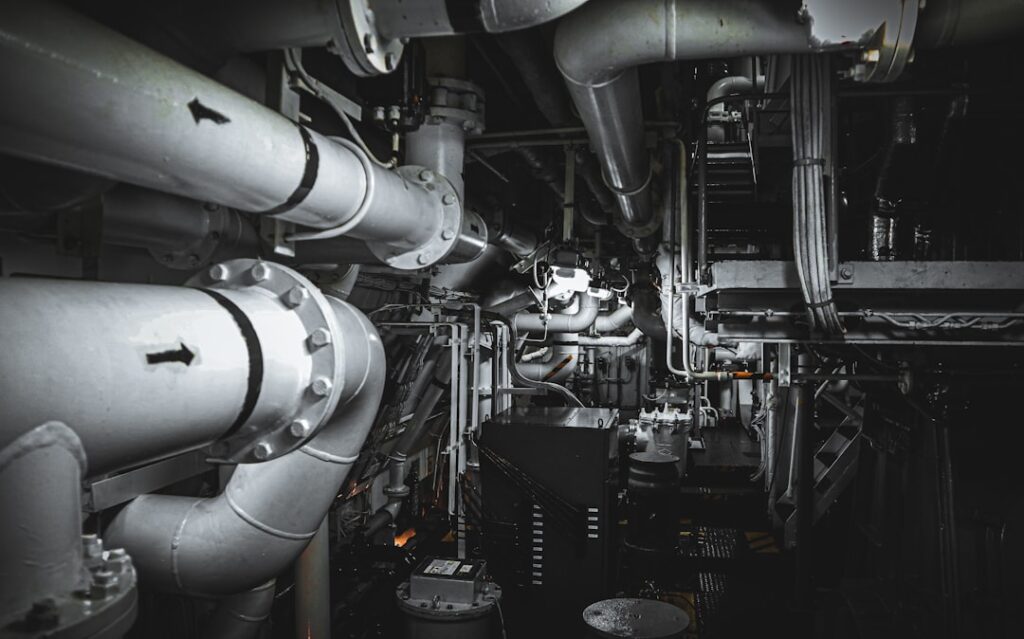
Air intake filtration on Gulf commercial vessels faces a contamination profile that temperate-climate manuals do not fully address. Shamal wind events carry fine sand (typically 1 to 100 microns, with a significant fraction below 10 microns) that penetrates engine room ventilation and intake ducting. Salt spray adds corrosive moisture that, combined with dust, forms an abrasive paste on filter media and turbocharger compressor wheels. The result is accelerated media loading, restricted airflow, and abrasive ingestion that scores cylinder liners and fouls charge air coolers.
Micron Ratings and Restriction Monitoring
Marine air intake filters typically specify efficiency at 10 to 20 microns, with high-efficiency media capturing 99% or better of particles above 10 microns. The critical metric is not just capture efficiency but restriction: as the media loads, airflow drops and combustion efficiency degrades. Black smoke, rising exhaust temperature, and poor acceleration are the operational symptoms. The air restriction indicator should trigger replacement before these symptoms appear. During Shamal events, inspect the restriction indicator daily and pre-stage replacement elements if the forecast predicts sustained dust conditions.
Cleaning vs. Replacement
Caterpillar specifically warns that cleaning air filter media can damage it and allow harmful debris into the engine over time. On Gulf vessels where dust loading is severe, cleaning is false economy. Replace elements on schedule or when the restriction indicator activates, whichever comes first. Compressed air cleaning can rupture media at the microscopic level, creating pathways for abrasive particles that are invisible to visual inspection but devastating to cylinder liners and ring packs.
Auxiliary Engine Air Filtration
Auxiliary engines and generators often run in confined engine room spaces with limited ventilation filtration. A Yanmar auxiliary on a Gulf tug or workboat may see more dust loading per operating hour than the main propulsion engine if the engine room air intake path is not adequately filtered. For Yanmar-specific filter part numbers and auxiliary engine maintenance guidance, see our Yanmar spare parts guide for Gulf tug and workboat auxiliaries.
Hydraulic and Coolant Filtration for Deck Machinery
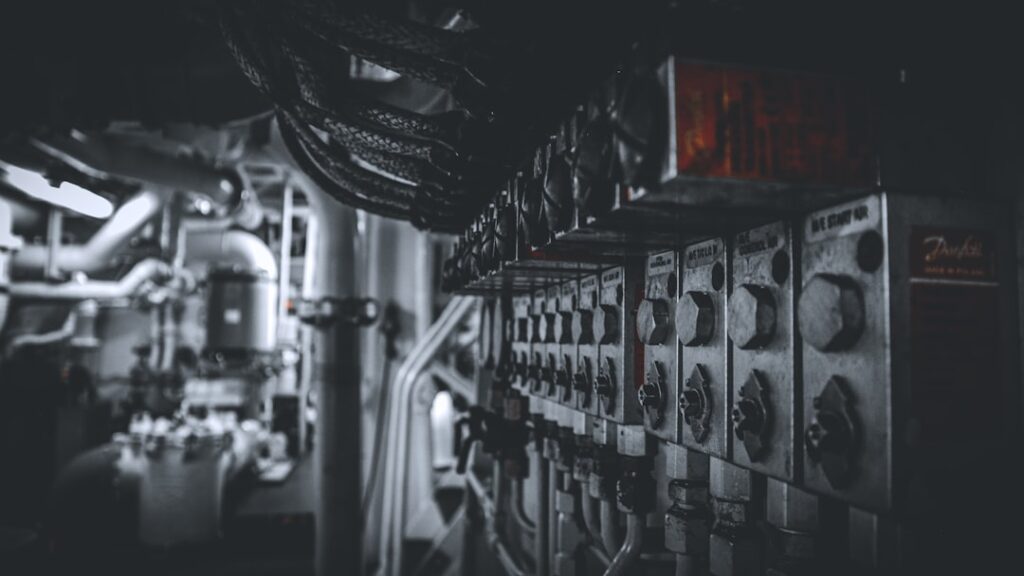
Hydraulic filtration protects the steering gear, deck cranes, winches, hatch systems, and anchor windlasses that keep a vessel operational. Hydraulic fluid contamination causes pump scoring, spool sticking, seal wear, and loss of control accuracy. In Gulf service, high ambient temperatures accelerate hydraulic oil degradation, and salt-laden humidity introduces moisture into reservoirs through breathers that are not properly specified.
Pressure-Line, Return-Line, and Offline Filtration
Hydraulic systems use filtration at multiple points in the circuit, each with different requirements. Pressure-line filters operate at 3 to 10 microns and protect downstream components (servo valves, proportional valves, actuators) from pump-generated wear particles. Return-line filters operate at 10 to 25 microns and capture contamination generated or ingested in the circuit before it returns to the reservoir. Offline (kidney loop) filtration runs continuously at 3 to 10 microns and maintains overall fluid cleanliness independent of the main circuit duty cycle.
Cleanliness Targets
Hydraulic system cleanliness is measured against ISO 4406 cleanliness codes. For proportional and servo valve systems, target ISO 4406 16/14/11 or better. For general hydraulic systems with directional valves, ISO 4406 18/16/13 is typically acceptable. If your fluid analysis shows degradation beyond these targets, the issue is usually one of three things: the return-line filter is too coarse, the offline filter is not running enough hours, or the reservoir breather is allowing contamination ingress. In Gulf conditions, specify desiccant breathers on hydraulic reservoirs to control moisture ingress from humid salt-laden engine room air.
Coolant Filtration
Coolant filters remove particulates from engine cooling circuits and, depending on system design, may manage coolant chemistry through supplemental coolant additive (SCA) charge. On engines running in Gulf waters where seawater temperatures reach 35°C and cooling systems are under sustained thermal load, cooling-system cleanliness directly affects heat exchange efficiency. Contaminated coolant scales heat exchanger surfaces, reduces heat transfer, and raises jacket-water temperatures. Cummins includes coolant filters in recommended service schedules on applicable equipment, confirming that cooling-system filtration is part of routine preventive maintenance, not a one-time installation.
For hydraulic filtration brand selection, our portfolio includes MP Filtri for high-performance hydraulic solutions, Argo Filters for hydraulic system protection, and INTERNORMEN Filters for advanced hydraulic and lubrication applications with contamination monitoring integration. STAUFF Filters and FAI FILTRI provide additional options for return-line and pressure-line duty across deck machinery circuits.
Filter Brand Cross-Reference: Parker, Donaldson, Baldwin, Hydac, FILTREC
Cross-referencing filter brands is an engineering decision, not a purchasing exercise. The objective is to match micron rating, flow capacity, collapse pressure, seal material, and media type to the application, not to find the cheapest element that threads into the housing. The table below summarizes the major brands we cross-reference, their application strengths, and typical specifications.
| Brand | Application Focus | Typical Micron Range | Key Strengths | Site Page |
|---|---|---|---|---|
| Parker Hannifin | Hydraulic, fuel, air | 1 to 25 μm | Racor fuel-water separators; hydraulic pressure and return line filters; global cross-ref database | Contact for cross-ref |
| Donaldson | Engine air, fuel, lube | 2 to 40 μm | High-efficiency air intake media; strong cross-ref coverage for Cat and Cummins engine platforms | Donaldson Filters |
| Baldwin | Fuel, lube, air, hydraulic | 2 to 40 μm | Extensive heavy-duty catalog; broad OEM cross-reference coverage for marine diesels | Contact for cross-ref |
| Hydac | Hydraulic, lubrication | 1 to 20 μm | High-pressure hydraulic filtration; inline and tank-top return filters; contamination sensors | Contact for cross-ref |
| FILTREC | Hydraulic, lubrication | 3 to 25 μm | European manufacture; pressure, return, and suction line filters with duplex assemblies | Contact for cross-ref |
| MP Filtri | Hydraulic | 3 to 25 μm | High-performance hydraulic; suction, return, and pressure line; clogging indicators | MP Filtri |
| INTERNORMEN | Hydraulic, lubrication | 1 to 25 μm | Advanced contamination monitoring integration; duplex filter assemblies | INTERNORMEN Filters |
| STAUFF | Hydraulic, lubrication | 3 to 25 μm | Return-line and pressure-line filters; robust Gulf service history | STAUFF Filters |
| Framo | Marine and offshore | Application-specific | Specialized marine and offshore system filtration | Framo Filters |
| Volvo Penta | Engine fuel, lube, air | 2 to 40 μm | OEM-specified for Volvo Penta marine engines | Volvo Filters |
Additional brands in our portfolio include Ikron Filter for hydraulic and lubrication systems, VTE Filters for industrial applications, UFI and SOFIMA Filters for automotive and industrial use, Sullair Filters for compressor air filtration, FAI FILTRI, Argo Filters, Lefong Filters, and Sampiyon Filter. Each brand page includes application details and product line specifications.
The cross-reference process always starts with the engine or system serial number and arrangement number, not the model name alone. Two Caterpillar 3406C engines with different arrangement numbers can use completely different filter elements with different micron ratings. Ordering by model name alone is the single most common sourcing error. It results in wrong parts, returns, and lead-time penalties that compound when the vessel has already left port. For a detailed treatment of identification discipline across multi-brand fleets, see our marine spare parts sourcing guide for Gulf fleets.
Selecting Filters by Vessel Type and Operating Area
Filter selection depends on vessel type, operating area, and engine platform. A harbor tug running Cat 3412 mains with Yanmar auxiliaries has different filtration requirements than an offshore supply vessel with MAN four-stroke propulsion and Wärtsilä generators. The framework below organizes the decision by vessel profile and Gulf operating context.
Harbor Tugs and Workboats
Short-cycle, stop-start operation with variable fuel quality from frequent small bunkering. Fuel-water separators need frequent inspection and draining. Air filters load faster in port dust and exhaust recirculation zones. Hydraulic filters on winch and towing gear see high cyclic loading that generates wear particles. Shorten all filter intervals by 20 to 30% from OEM baselines, and inspect primary fuel filter elements after every bunkering.
Offshore Supply Vessels
Sustained offshore operation with multiple engine brands and hydraulic systems for deck machinery. Fuel quality may be variable depending on supply base. Air filtration is critical during port approaches and Shamal conditions. Monitor hydraulic cleanliness closely for crane and anchor handling systems, where servo valve contamination can cause loss of load control. Specify offline kidney-loop filtration on critical hydraulic circuits.
Coastal Cargo Vessels
Steady-state operation on known routes. OEM operating-hour schedules can be followed more closely, but still adjust for Gulf summer conditions. Track differential pressure and oil analysis to optimize intervals rather than running to maximum hours. Pay particular attention to fuel filter loading during fuel transitions, when blended fuel instability can produce asphalentine precipitates that load primary elements rapidly.
Passenger Vessels and Ferries
Conservative replacement planning to reduce service interruptions and smoke-related complaints. Air filtration is critical for engine room and ventilation systems. Priority on fuel cleanliness to avoid visible smoke and poor combustion. Passenger vessels operating in Gulf waters should run fuel-water separator inspection at every watch and maintain primary element spares onboard at all times.
Get Genuine Marine Filters Delivered Gulf-Wide
Send your engine serial number, arrangement number, and current filter part requirements for a same-day cross-reference and quotation. Include your vessel’s ETA at the delivery port for urgent requirements. Our team at zeemacgroup.com cross-references OEM part numbers against genuine and OEM-equivalent filter brands, validates micron ratings and flow capacities for your specific engine model, and confirms compatibility before any order ships.
We deliver to Jebel Ali, Khalifa Port, Hamriyah Free Zone, and all major Gulf ports and shipyards. Whether you are running Caterpillar 3412 mains with MAN auxiliary gensets on a Gulf OSV, or Wärtsilä propulsion with Yanmar harbor generators on a coastal vessel, we consolidate your filter requirements across fuel, lube, air, and hydraulic systems into a single validated quotation. Contact zeemacgroup.com today with your engine details and filter list.
Frequently Asked Questions
What micron rating should marine fuel filters have?
Primary fuel filters typically rate 10 to 30 microns for coarse capture and water separation. Secondary filters rate 2 to 10 microns, with modern common-rail injection systems requiring 2 to 5 micron absolute filtration. Always confirm whether the published rating is nominal or absolute before accepting a cross-reference element.
How often should marine filters be changed on Gulf-operating vessels?
OEM intervals should be compressed by 20 to 30% in Gulf service due to high ambient temperatures, dust ingress, and variable fuel quality. Track differential pressure daily and replace when it reaches 70% of the alarm threshold, regardless of operating hours. Shorten intervals further after bunkering events flagged by fuel analysis.
Can I cross-reference OEM filter part numbers to aftermarket brands?
Yes, if the cross-reference is validated using the engine serial number and arrangement number, not just the model name. Always confirm micron rating, flow capacity, collapse pressure, and seal material compatibility before accepting a substitute element. Two engines with the same model name but different arrangement numbers can require different filter elements.
What ISO cleanliness code should hydraulic systems target?
Proportional and servo valve systems should target ISO 4406 16/14/11 or better. General hydraulic systems with directional valves typically operate acceptably at ISO 4406 18/16/13. If fluid analysis shows degradation beyond these targets, check return-line filter micron rating, offline filter running hours, and reservoir breather condition.
How does Gulf salt spray affect air intake filters?
Salt spray combined with dust forms an abrasive paste on filter media and turbocharger compressor wheels. During Shamal wind events, fine sand below 10 microns penetrates engine room ventilation and intake ducting. Inspect restriction indicators daily during Shamal conditions, pre-stage replacement elements, and never clean air filter media as compressed air can rupture it at the microscopic level.