
Sourcing MAN spare parts for a Gulf-operated fleet means navigating two fundamentally different parts ecosystems. MAN B&W two-stroke low-speed main propulsion engines and MAN four-stroke medium-speed auxiliary engines share a parent brand but differ in almost every practical way: component size, ordering workflow, failure patterns, and lead times. Treating them as one category leads to wrong parts, delayed deliveries, and costly downtime. This guide separates the two ecosystems and gives superintendents and procurement teams the technical detail needed to order correctly.
MAN Two-Stroke vs. Four-Stroke Marine Engines: Parts Distinction
MAN B&W two-stroke engines are low-speed main propulsion units, typically running at 60 to 120 RPM, directly coupled to the propeller shaft. These are massive, heavy crosshead engines where individual components, such as a single cylinder liner or piston crown, can weigh several hundred kilograms and require specialized lifting and transport. Parts are slow-moving, high-value, and ordered against specific engine build data. The supply chain for these components is long: foundry-to-machine shop-to-warehouse, with lead times that can stretch weeks or months for oversized or made-to-order items.
MAN four-stroke medium-speed engines, by contrast, are higher-revving genset and auxiliary units, typically operating at 750 to 1,200 RPM. These power the ship’s electrical generation, emergency systems, and sometimes propulsion in smaller vessels. Their parts ecosystem is closer to a high-turnover consumables model: filter elements, bearing shells, gasket sets, and fuel injection nozzles move faster, are stocked more readily, and follow a more standardized ordering pattern. The distinction matters because a procurement team that applies four-stroke ordering logic (expecting fast stock availability) to a two-stroke requirement will face expensive delays, while treating four-stroke consumables with the long-lead caution reserved for two-stroke components ties up budget unnecessarily.
For a broader overview of how these parts fit into the full vessel supply picture, see our marine spare parts inventory, which covers both main engine and auxiliary components across multiple brands.
MAN B&W Two-Stroke: High-Value Spares and Wear Components
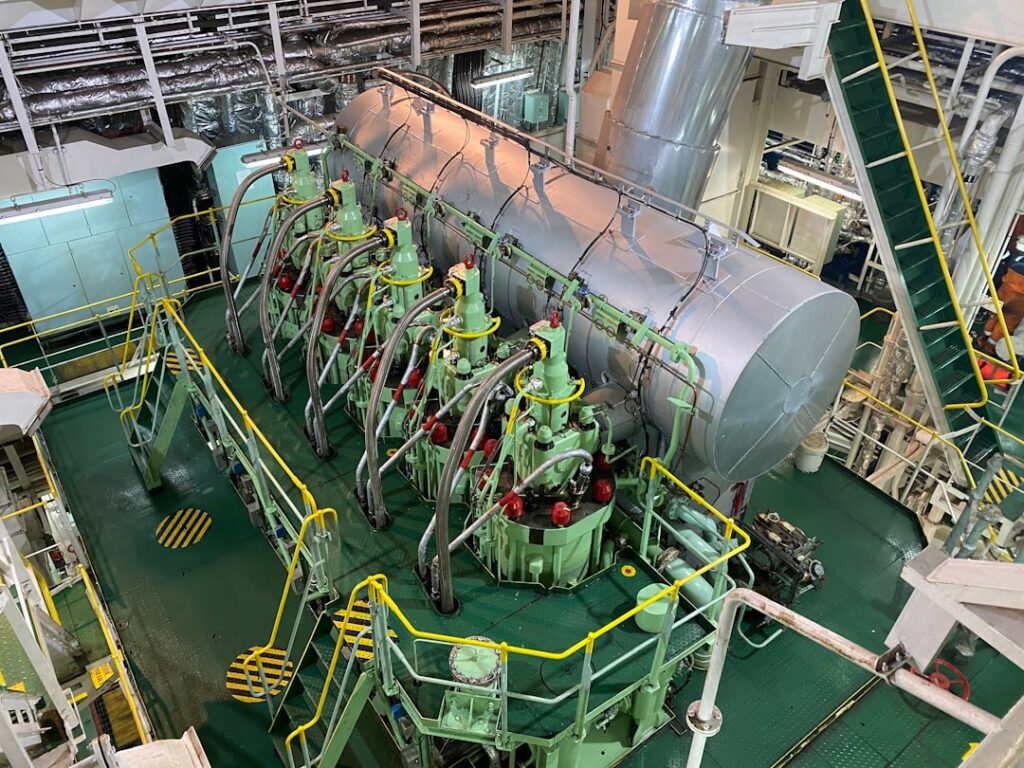
The two-stroke parts list is dominated by heavy, precision-machined components with long service intervals but significant lead times. When a superintendent opens the engine room log and sees a top-overhaul approaching, these are the categories that matter. Every order must reference the exact engine designation, bore size, and stroke number, because MAN B&W engines are designated by these parameters (for example, 6S70ME-C9.2 means 6 cylinders, S-bore series, 700 mm bore, ME-C electronic control, Mark 9.2). A part number for a 700 mm bore liner will not fit a 600 mm bore engine, and the ME vs. MC distinction changes fuel system components entirely.
Piston Rings and Piston Crowns
Piston rings for two-stroke MAN engines are large, segmented, and specified by bore diameter and ring groove dimensions. The ring set typically includes compression rings, scraper rings, and sometimes spring-loaded rings depending on the engine series. Piston crowns themselves are among the highest-value single components on the ship. Ordering the correct crown requires the engine serial number and the piston crown part number from the build report, because crowns were updated across production years and not all interchangeable versions fit all cylinder covers.
Cylinder Liners
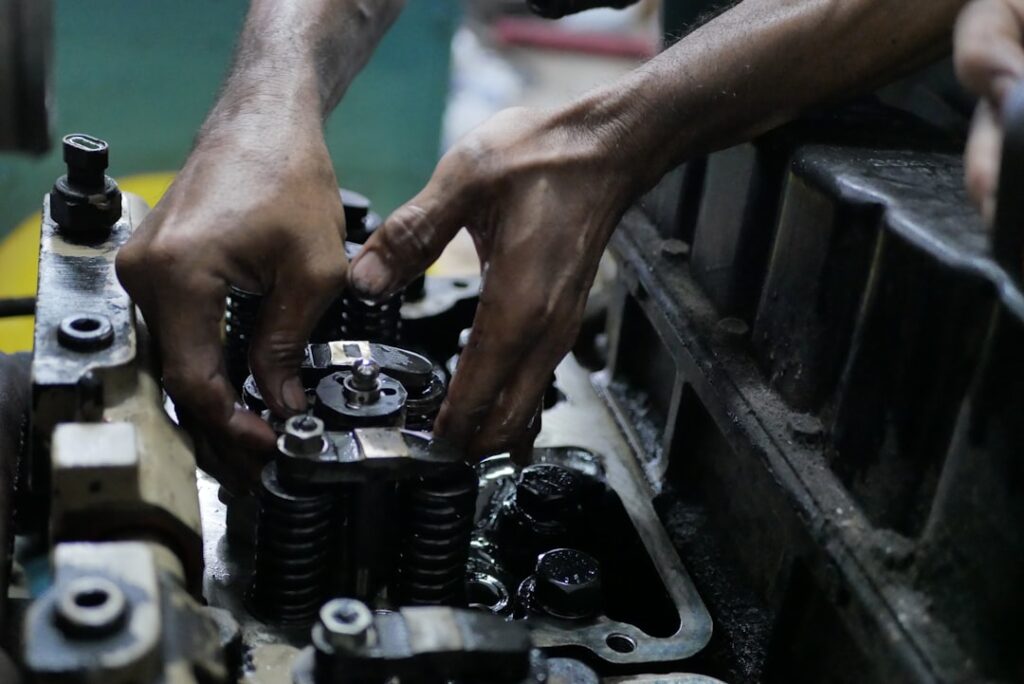
Cylinder liners in two-stroke MAN engines are bore-cooled, nitrided or induction-hardened castings designed for 8,000 to 12,000 running hours between overhauls depending on load profile and fuel quality. In Gulf operations, where residual fuel sulfur content can be elevated and catalytic fines (cat fines) sometimes pass through even well-maintained fuel treatment systems, liner wear rates can exceed manufacturer baseline figures. Procurement teams should track measured liner bore dimensions at each overhaul rather than relying on calendar intervals alone, and order replacement liners early when wear approaches the maximum allowable bore.
Fuel Valve Assemblies: MC vs. ME Distinction
This is where the MC versus ME designation matters most. MAN B&W MC-series engines (S-MC, L-MC, K-MC) use mechanically controlled fuel injection: cam-driven fuel pumps feeding uncooled or cooled fuel valve nozzles. The parts are robust, relatively simple, and serviceable with standard workshop tooling. ME-series engines (ME, ME-B, ME-C) use electronic fuel injection controlled by the Engine Control System (ECS). The fuel injection components include hydraulic valve blocks, electronic control units (FCAs), and high-pressure piping that differs entirely from MC equivalents. An ME fuel valve assembly is not interchangeable with an MC part, and ordering the wrong one is a common, expensive mistake when engine documentation is incomplete.
Stuffing Boxes and Exhaust Valves
The stuffing box seals the scavenge air space from the crankcase and contains scraper rings that remove oil from the piston rod. Wear on stuffing box rings is accelerated by poor lube oil feed rates and abrasive contamination, both of which are elevated in Gulf residual fuel operations. Exhaust valves on MAN two-stroke engines are hydraulically operated with spindle rotation and sealing seat faces that require reconditioning or replacement at intervals governed by exhaust gas temperature and fuel type. High-sulfur fuel increases sulfuric acid condensation at the exhaust valve seat, shortening valve life and demanding closer monitoring of valve spindle seat condition.
MAN Four-Stroke: Genset and Auxiliary Engine Spares
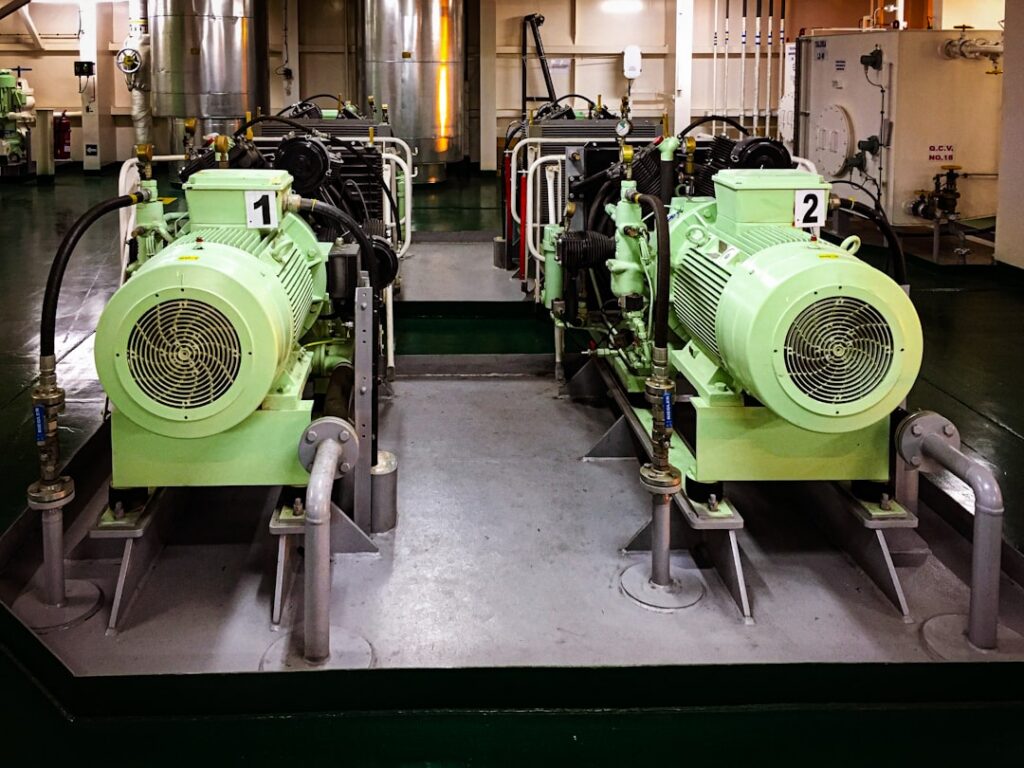
MAN four-stroke auxiliary engines are the workhounds of the engine room, running continuously to supply electrical power. Their parts ecosystem is faster-moving, more standardized, and more comparable to high-speed diesel engine spares. The three series most commonly found on Gulf-operated commercial vessels are the L16/24, L21/31, and V28/33S, each with distinct part number conventions and component specifications.
L16/24 Series
The L16/24 is a compact inline genset engine used for harbour and emergency power on many vessels. Its smaller bore (160 mm) and stroke (240 mm) mean relatively small components, but high RPM (1,000 to 1,200) translates to higher cyclic loading on bearings and valve gear. Common spares include lube oil filter elements, fuel filter cartridges, valve seat inserts, injector nozzles, and bearing shells. Filter element replacement is the highest-frequency maintenance task, and in Gulf ambient temperatures exceeding 45 degrees Celsius in engine room conditions, lube oil oxidation rates accelerate, shortening effective filter life. Our guidance on marine filter selection for ship operations covers filtration standards relevant to these operating conditions.
L21/31 Series
The L21/31 is a mid-range auxiliary engine producing higher output for main shipboard power generation. With a 210 mm bore and 310 mm stroke, its components are larger and heavier than the L16/24. Charge air cooler maintenance is a critical spares category: cooler tubes, water boxes, and sealing gaskets require periodic replacement, particularly in Gulf waters where salt spray and biofouling reduce cooler efficiency and raise scavenge air temperatures. Fuel injection pumps and nozzles for the L21/31 are matched to the engine’s specific injection timing and should be ordered with the engine serial number to ensure calibration data matches.
V28/33S Series
The V28/33S is a V-configured high-output auxiliary engine used on larger vessels with significant power demands. Its V-block layout means parts must be ordered with cylinder bank designation (bank A vs. bank B) in addition to cylinder number, because intake and exhaust components differ by bank position. Bearing shells, especially main bearings and big-end bearings, are high-priority spares due to the engine’s power density and operating temperature. Fuel injection components for the V28/33S use the MAN common rail system on later production models, which adds high-pressure pump and rail control valve parts to the spares inventory.
| Parameter | L16/24 | L21/31 | V28/33S |
|---|---|---|---|
| Configuration | Inline | Inline | V-block |
| Bore / Stroke (mm) | 160 / 240 | 210 / 310 | 280 / 330 |
| Typical RPM Range | 1,000 to 1,200 | 900 to 1,000 | 750 to 1,000 |
| Primary Spares Demand | Filters, injectors, valve gear | Charge air cooler parts, bearings, fuel pumps | Bearings, common rail components, cooler parts |
| Gulf-Specific Wear Factor | Lube oil oxidation, filter clogging | Cooler fouling, scavenge air temp rise | Bearing wear from thermal loading, fuel quality |
| Part Number Bank Designation | Sequential cylinder numbering | Sequential cylinder numbering | Bank A / Bank B required |
Across all three series, lube oil filter replacement intervals in Gulf operations should be shortened relative to manufacturer baseline recommendations. Ambient temperatures in UAE and wider Gulf engine rooms consistently push lube oil temperatures toward the top of the operating range, accelerating oil degradation, additive depletion, and filter medium breakdown. A baseline 2,000-hour filter change interval may need to compress to 1,500 hours or less depending on load profile and fuel quality. This aligns with the broader maintenance guidance we provide alongside our marine engine spares and filter supply across major brands.
Sourcing Genuine MAN Parts: Serial Numbers and Documentation

Ordering the correct MAN spare part starts with the engine serial number and the build report. Every MAN B&W two-stroke engine carries a unique serial number stamped on the engine data plate, and the build report (also called the testbed protocol or delivery document) lists every major component with its individual part number. For two-stroke high-value components, this is non-negotiable: a cylinder liner ordered without the exact part number from the build report risks a mismatch on cooling bore geometry, top-land dimensions, or material specification.
For four-stroke auxiliary engines, the parts catalog keyed by engine serial number is the primary reference. MAN publishes parts catalogs (often referred to as the spare parts catalog or CPC) that map each engine serial number to its specific component configuration. Procurement teams should maintain a current copy of the parts catalog for every MAN engine in the fleet, because superseded part numbers and design updates make older catalogs unreliable. When a part number is superseded, the catalog provides the cross-reference to the current valid number.
Verifying Authenticity on High-Value Two-Stroke Components
Counterfeit and substandard parts are a real risk in the two-stroke aftermarket, especially for high-value items like piston crowns, cylinder liners, and exhaust valve spindles. Genuine MAN B&W parts carry specific marking conventions: part numbers are stamped or cast with consistent font and depth, and certain critical components carry additional traceability markings. A supplier who cannot provide a traceable chain back to MAN Energy Solutions or an authorized manufacturing partner should be treated with caution. Signs of non-genuine parts include inconsistent machining finish, absence of manufacturer markings, documentation that does not match the physical component, and pricing that is significantly below market.
Information to Provide When Requesting a Quote
To get an accurate quotation with minimal back-and-forth, provide the following with every MAN spare parts inquiry: engine type designation (e.g., 6S70ME-C9.2), engine serial number, the specific part number from the parts catalog or build report, the quantity required, and the delivery location (port or yard). For urgent requirements, include the vessel’s ETA at the delivery port. zeemacgroup.com cross-references this data against current MAN parts databases to confirm the correct part and check for supersessions before quoting.
Request MAN Spare Parts Pricing
If your fleet operates MAN B&W two-stroke main engines or MAN four-stroke auxiliary gensets, send us your engine serial numbers and part number requirements for a cross-referenced quotation. zeemacgroup.com supplies genuine and OEM-equivalent MAN spare parts with delivery to Jebel Ali, Khalifa Port, Hamriyah, and across the Gulf region. Contact our marine spares team with your build report or parts catalog references, and we will confirm stock availability, lead time, and pricing within one business day.
Frequently Asked Questions
What is the difference between MAN MC and ME engine designations for spare parts?
MAN B&W MC-series engines use mechanically controlled, cam-driven fuel injection, while ME-series engines use electronic fuel injection controlled by the Engine Control System. The fuel valve assemblies, fuel pumps, and control components are not interchangeable between MC and ME engines. Always confirm the exact engine designation before ordering fuel system parts.
How do Gulf operating conditions affect MAN four-stroke lube oil filter replacement intervals?
Gulf ambient temperatures frequently exceed 45 degrees Celsius, which raises engine room and lube oil temperatures. This accelerates oil oxidation, additive depletion, and filter medium breakdown. A baseline 2,000-hour filter interval may need to be shortened to 1,500 hours or less depending on load profile and fuel quality.
What information do I need to order MAN two-stroke cylinder liners or piston crowns?
You need the engine serial number, the full engine type designation including bore size and stroke, and the specific part number from the engine build report or parts catalog. Cylinder liners and piston crowns are matched to bore dimensions and production year updates, so ordering without these references risks component mismatch.
Are MAN spare parts for the L16/24, L21/31, and V28/33S series interchangeable?
No. Each series has distinct bore and stroke dimensions, part number conventions, and component specifications. The V28/33S additionally requires bank A or bank B designation for certain parts due to its V-block configuration. Parts must be ordered using the engine serial number keyed to the specific series parts catalog.
How can I verify that a MAN spare part is genuine?
Genuine MAN parts carry consistent manufacturer markings, part number stamps, and traceability documentation. Request a traceable supply chain back to MAN Energy Solutions or an authorized partner. Signs of non-genuine parts include inconsistent machining, missing manufacturer markings, documentation that does not match the physical component, and pricing significantly below market rates.