
Gulf commercial fleets running Caterpillar marine engines span two generations of platforms: the legacy 3406 and 3412 models that still power hundreds of older tugs and offshore vessels, and the current C18 and C32 ACERT engines fitted on modern OSVs and crew boats. Chief engineers and procurement teams managing these fleets face a split challenge: sourcing discontinued parts for aging 3406 and 3412 units while maintaining the electronic and common rail systems on current C-series engines, all under Gulf ambient conditions that push cooling and filtration systems to their limits.
Caterpillar Marine Engines: Families and Gulf Applications
The four engine families most relevant to Gulf commercial fleets break into two groups. The legacy 3406 and 3412 models, built from the 1980s through early 2000s, remain in active service across harbor tugs, crew boats, and older offshore supply vessels. The C18 and C32, built on Caterpillar’s current ACERT platform, are specified on newbuild OSVs, platform supply vessels, and anchor handling tug supply vessels operating from Gulf ports.
The Legacy Fleet: 3406 and 3412
The 3406 is an inline 6-cylinder engine with approximately 14.6 liters of displacement that served as a workhorse propulsion and auxiliary engine across Gulf harbor tugs, crew boats, and smaller offshore vessels. The 3412, a V12 configuration at approximately 27.0 liters, powered larger OSVs and anchor handlers. Both models went through mechanical variants (B and C series) and electronic variants (E series), and many remain in active service 20 to 30 years after manufacture.
The key sourcing challenge with these engines is that many original part numbers have been superseded or moved to Cat Reman availability only. Engines built in the 1990s and early 2000s often carry arrangement numbers that differ from later production runs, meaning a “3406C” serial number prefix alone does not guarantee parts compatibility. The full engine serial number, including the arrangement number stamped on the data plate, is required for accurate identification.
Current Platforms: C18 and C32
The C18 (inline 6, approximately 18.1 liters) and C32 (V12, approximately 32.1 liters) represent Caterpillar’s ACERT technology platform. These engines feature electronically controlled fuel systems, advanced diagnostic capability through ADEM electronic control modules, and aftertreatment integration depending on the emissions tier. For a broader overview of our Caterpillar filtration and spares coverage, see our Caterpillar filters and marine engine spares page.
For Gulf fleets, the C18 commonly serves as a propulsion engine on vessels up to approximately 60 meters, while the C32 handles higher-power applications including large OSVs and AHTS vessels. Both platforms are also deployed as auxiliary generator sets, where continuous-duty operation in high ambient temperatures places additional stress on cooling circuits and filtration systems.
High-Priority Spare Parts for Cat 3406 and 3412
Maintaining legacy 3406 and 3412 engines in Gulf commercial service requires a focused spares strategy targeting the components that fail most frequently under high-ambient, high-load conditions. The following categories represent the highest-priority items for fleet managers and chief engineers responsible for keeping these aging platforms operational.
Cylinder Kits, Liners, and Bearings
Cylinder kits, comprising the piston, rings, pin, and liner, are the most critical major overhaul components for both models. Under Gulf conditions, where intake air temperatures regularly exceed 40 degrees Celsius and seawater cooling temperatures can reach 35 degrees in summer, liner wear rates accelerate compared to temperate-climate operations. Main and connecting rod bearings also see accelerated wear due to higher lube oil operating temperatures and potential viscosity breakdown.
For the 3412, bearing sets are particularly critical to stock because the V12 configuration uses more bearing surfaces per engine. A single bearing failure can cascade into crankshaft damage if not caught early through regular oil analysis. Procurement teams should maintain at least one complete bearing set per engine for vessels operating on extended Gulf deployments.
Fuel Injectors and Unit Injectors
The 3406E and 3412E use Caterpillar’s HEUI (Hydraulically Actuated Electronic Unit Injector) system, which is sensitive to fuel quality and lube oil condition. Under Gulf operating conditions, where fuel sulfur content and water contamination can vary between bunkering points, injector nozzle wear and sticking are common failure modes that lead to rough running, smoke, and eventual cylinder derate.
For the mechanical 3406C and 3412C variants, injector nozzles and delivery valves remain available but may require cross-referencing against the specific arrangement number. Cat Reman injectors offer a cost-effective alternative to new units, though procurement teams should verify class acceptance for their vessel’s survey status before installation.
Turbocharger Cartridges
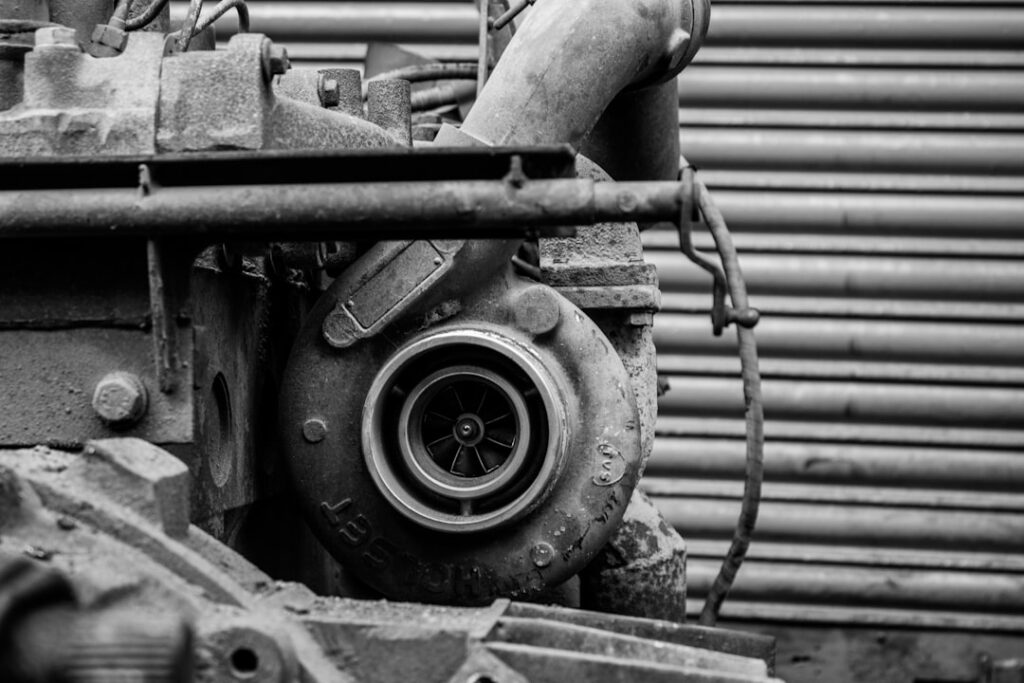
Turbocharger failures on legacy 3406 and 3412 engines are frequently traced to three Gulf-specific factors: thermal stress from high exhaust gas temperatures, compressor wheel fouling from salt-laden intake air, and lube oil degradation at elevated temperatures. Turbocharger cartridge assemblies, the rotating group including compressor wheel, turbine wheel, and bearings, are among the most commonly ordered spares for these models.
When sourcing turbo cartridges, verify the turbocharger model number, typically a Caterpillar or Schwitzer designation, rather than relying on the engine model alone. Different arrangement numbers within the same engine family may use different turbocharger specifications, and ordering by engine model without the arrangement number is a common sourcing error that results in returns and delays.
Serial Number Prefix Identification for Legacy Models
Caterpillar engine serial numbers use a prefix system that identifies the engine family and configuration. For the 3406, common marine prefixes include designations indicating the series (B, C, or E) and the specific marine rating. The 3412 follows a similar convention across its mechanical and electronic variants.
The critical detail: the arrangement number, typically listed alongside the serial number on the engine data plate, specifies the exact bill of materials for that engine configuration. Two 3406C engines with different arrangement numbers may use different cylinder kits, bearings, or injectors. Always capture both the full serial number and arrangement number when requesting a quotation to avoid misordered parts and costly return cycles.
C18 and C32: Current-Platform Parts and Common Service Items
The C18 and C32 ACERT platforms introduce electronically managed fuel systems, advanced sensing, and integrated diagnostics that change the spare parts profile compared to legacy engines. Under Gulf operating conditions, certain components show higher failure rates due to thermal loading, salt exposure, and dust ingestion that characterize the region’s maritime environment.
Common Rail and MEUI Fuel System Components
Depending on the C18 and C32 variant and emissions tier, the fuel system uses either MEUI (Mechanically Actuated Electronic Unit Injector) or common rail architecture. Common rail high-pressure fuel pumps and injector assemblies are precision components that are sensitive to fuel contamination, a recurring issue in Gulf operations where fuel quality at remote bunkering stations can vary significantly.
Injectors for the C18 and C32 are typically ordered as complete assemblies rather than repair kits. Cat Reman injectors are widely available for these platforms and offer significant cost savings while maintaining factory-calibrated performance specifications. For vessels burning higher-sulfur fuel, injector inspection and replacement intervals should be shortened from standard recommendations.
Aftercooler Cores
Aftercooler cores on C18 and C32 engines are among the most failure-prone components in Gulf service. High seawater temperatures reduce cooling efficiency, while saltwater corrosion attacks the tube-to-header joints. When charge air temperatures rise, thermal stress increases on pistons, valves, and turbochargers, creating a cascade effect that can lead to more serious mechanical failures if left unaddressed.
Stocking aftercooler core assemblies, or having a rapid sourcing channel for these units, is essential for Gulf-based C18 and C32 fleets. The aftercooler part number varies by arrangement, so verify against the engine data plate rather than the engine model name alone.
Electronic Control Modules and Sensors
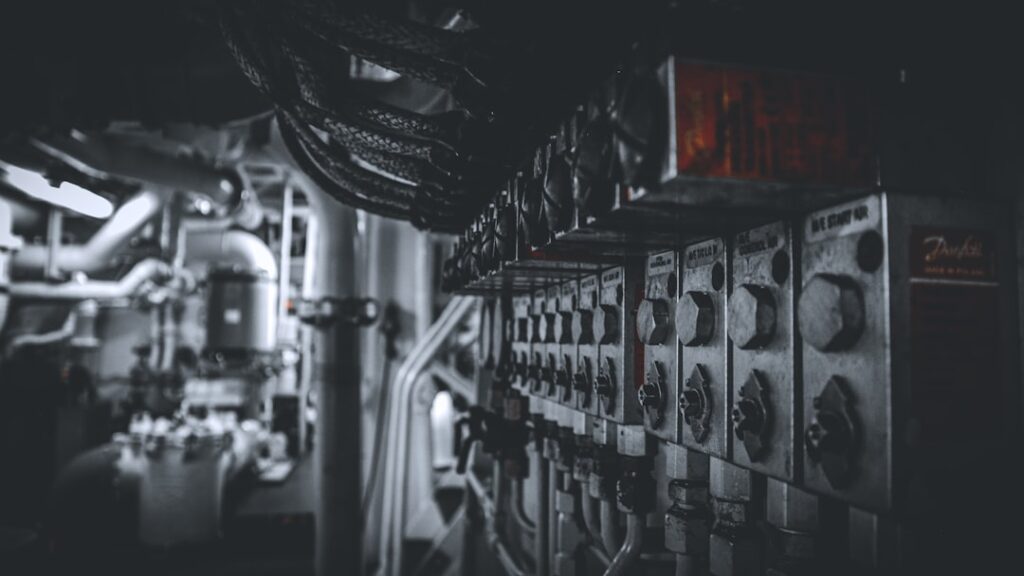
The ADEM electronic control module on C18 and C32 engines manages fuel injection timing, boost pressure, and diagnostic monitoring. While ECM failures are relatively rare, sensor failures are common under high-temperature, high-vibration conditions. Boost pressure sensors, coolant temperature sensors, oil pressure sensors, and crankshaft position sensors all operate in thermally demanding environments that accelerate electrical degradation.
For vessels operating in Gulf waters, maintaining a stock of critical sensors prevents unplanned shutdowns that can trigger derate modes and limit vessel operational capability. A failed coolant temperature sensor, for example, can force the engine into reduced-power mode, which on an OSV in transit translates directly to schedule delays and contractual penalties.
Filtration: Part References and Gulf Service Intervals
Under Gulf severe-duty conditions, Caterpillar’s standard filter replacement intervals should be tightened to account for high ambient temperatures, dust loading, and fuel quality variability. The table below summarizes commonly referenced Cat filter part numbers and recommended service intervals for C18 and C32 engines operating in Gulf commercial fleets. All part numbers must be verified against the engine’s arrangement number, as different C18 and C32 ratings may use different filter elements.
| Filter Type | Common Cat Part Reference | Standard Interval | Gulf Severe-Duty Interval |
|---|---|---|---|
| Lube Oil Filter | 1R-0750 (verify by arrangement) | 250 hours | 200 hours |
| Fuel Filter (Primary) | 1R-0716 or 1R-0749 (verify) | 500 hours | 250 to 500 hours |
| Fuel Filter (Secondary) | 1R-0711 (verify) | 500 hours | 250 to 500 hours |
| Air Filter Element | Per arrangement number | 1,000 hours | Inspect monthly; replace as needed |
Lube oil filters should be changed more frequently under Gulf conditions because high oil operating temperatures accelerate additive depletion and oxidation. Fuel filters require closer attention due to microbial growth in warm fuel and potential water contamination from condensation in partially filled day tanks. Air filter elements face accelerated dust loading, particularly on vessels operating near coastal construction sites or in Shamal wind conditions that carry fine sand particles offshore.
Cat Marine Engine Parts Sourcing: What Engineers Should Know
Effective Caterpillar parts sourcing for Gulf commercial fleets depends on three factors: accurate engine identification using serial numbers and arrangement numbers, understanding the distinction between Cat Genuine and Cat Reman components, and alignment with classification society requirements during survey cycles. Getting any of these wrong results in delays, returns, or non-compliant installations that can affect vessel class status.
Engine Identification Using Serial Numbers and Arrangement Numbers
Every Caterpillar marine engine carries a data plate with the engine serial number and arrangement number. The serial number prefix identifies the engine family (such as 3406C or C18), while the arrangement number specifies the exact component configuration for that engine build. When requesting quotations, provide both numbers to eliminate the most common sourcing error: ordering parts that fit the same engine model but not the specific arrangement.
For older engines where data plates may be damaged or illegible, the engine serial number can be looked up through Caterpillar’s Service Information System to retrieve the arrangement and applicable part numbers. Chief engineers should maintain a record of each engine’s serial number, arrangement number, and current hour reading as part of the vessel’s planned maintenance system.
Cat Genuine vs. Cat Reman Parts
Cat Genuine parts are new components manufactured to current Caterpillar specifications. They carry full Caterpillar warranty and are the default choice for critical components such as crankshafts, connecting rods, and cylinder blocks where material integrity is paramount.
Cat Reman parts are remanufactured units returned to Caterpillar factory specifications through a process that includes complete disassembly, inspection, replacement of worn components, and reassembly to current tolerances. Cat Reman parts typically carry the same warranty coverage as Genuine parts and offer significant cost savings on components such as injectors, turbochargers, water pumps, and cylinder heads. The decision between Genuine and Reman often comes down to the component criticality, class requirements, and the vessel’s position in its survey cycle.
For our full coverage of Caterpillar filters and marine engine spares across both Genuine and Reman options, see our Caterpillar product page. For multi-brand marine spare parts sourcing beyond Caterpillar, our marine spare parts inventory covers the complete range of components that Gulf commercial fleets require.
Class Survey Implications
Vessels under class survey with DNV, ABS, Lloyd’s Register, or Bureau Veritas face additional considerations when sourcing spare parts. Critical components, including crankshafts, connecting rods, camshafts, and cylinder heads, may require certificates of conformity or material certificates that trace back to the manufacturing source. Classification societies generally accept both Cat Genuine and Cat Reman parts, but documentation requirements vary by society and by component category.
For vessels approaching survey, confirm that any Reman components installed on critical systems have accompanying documentation that meets the class society’s requirements. Consumable items such as filters, gaskets, and standard bearings typically do not require class approval, but maintaining a clear paper trail of part numbers and installation dates streamlines the survey process and demonstrates a proactive maintenance culture to surveyors.
zeemacgroup.com brings 26 years of experience supporting Gulf commercial fleets with genuine and Reman Caterpillar marine engine spares. Our technical team can cross-reference your engine serial number and arrangement number to confirm exact part compatibility, provide stock availability, and arrange delivery to Jebel Ali, Khalifa Port, Hamriyah Free Zone, and all major Gulf ports.
Get a Quote for Caterpillar Marine Engine Spares
Whether you are maintaining legacy 3406 and 3412 engines on older tugs or managing C18 and C32 ACERT platforms on modern OSVs, accurate parts sourcing starts with the right information. Send us your engine serial number and arrangement number for a same-day quotation on Genuine and Reman Cat marine spares. We deliver to Jebel Ali, Khalifa Port, Hamriyah Free Zone, and all major Gulf ports and shipyards.
Contact our marine spares team for stock availability and pricing on cylinder kits, liners, bearings, fuel injectors, turbocharger cartridges, aftercooler cores, filtration elements, ECM sensors, and all common service items for Caterpillar 3406, 3412, C18, and C32 engines. Include your engine serial number and arrangement number in your enquiry for the fastest and most accurate response.
Frequently Asked Questions
How do I identify the correct Caterpillar marine engine parts for my vessel?
Use the engine serial number and arrangement number from the engine data plate. The serial number prefix (such as 3406C or C18) identifies the engine family, while the arrangement number specifies the exact component configuration. Always verify parts against both numbers to ensure correct ordering and avoid returns.
What is the difference between Cat Genuine and Cat Reman parts?
Cat Genuine parts are new OEM components manufactured to current Caterpillar specifications. Cat Reman parts are remanufactured units returned to factory standards through complete disassembly, component replacement, and reassembly to current tolerances. Reman parts typically carry the same warranty and offer significant cost savings on items like injectors, turbochargers, and water pumps.
How do Gulf operating conditions affect Cat marine engine service intervals?
High ambient temperatures (45 degrees Celsius and above), warm seawater, salt spray, and dust ingestion accelerate wear on filters, aftercoolers, turbochargers, and fuel systems. Standard oil change intervals of 250 hours may need reduction to 200 hours under severe duty. Fuel filters should be inspected more frequently for water and microbial contamination common in warm Gulf fuel systems.
Which Caterpillar marine engine parts fail most frequently under Gulf conditions?
Aftercooler cores (corrosion and fouling), turbocharger cartridges (thermal stress), fuel injectors (contaminated fuel), and all filtration elements show the highest failure rates. Cooling system components including seawater pump impellers and heat exchanger zincs also require frequent attention in Gulf waters where high seawater temperatures reduce cooling efficiency.
Can I use Cat Reman parts on a vessel under class survey?
In most cases yes, but classification societies may require specific documentation for critical components. Cat Reman parts carry Caterpillar warranty and are remanufactured to factory specifications. However, confirm with your class society (DNV, ABS, Lloyd’s Register, or Bureau Veritas) before installing Reman parts on critical systems like crankshafts or connecting rods, as documentation requirements vary.