


Marine spare parts sourcing fails most often not because the part does not exist, but because the request reaches the supplier with incomplete identification data, the wrong brand ecosystem assumptions, or no accounting for Gulf operating conditions that shorten service life. A chief engineer managing Caterpillar mains, Yanmar auxiliaries, and a Wartsila bow thruster on a single OSV is juggling three parts catalogs, three ordering conventions, and three lead-time realities. When one of those threads breaks, the vessel sits alongside, burning charter hire and burning through the superintendent’s margin.
This guide covers the decisions that actually drive sourcing outcomes for Gulf-based commercial fleets: when to specify genuine OEM versus aftermarket, how to structure inventory across mixed-brand engine rooms, and how to evaluate a supplier before trusting them with your downtime. For brand-specific deep dives, see our Caterpillar marine engine spares guide and our MAN spare parts: two-stroke vs four-stroke analysis.
Why Marine Spare Parts Sourcing Goes Wrong

Most sourcing failures trace back to a small set of recurring mistakes, each of which is preventable with disciplined identification and ordering practices. The cost of these mistakes is rarely the part price. It is the vessel downtime, the freight expediting, and the re-order cycle that follows.
Ordering by Engine Model Without Serial or Arrangement Number
The single most common sourcing error is requesting a part using only the engine model name. A request for “Caterpillar 3412 fuel injectors” or “MAN L21/31 bearing shells” is insufficient for accurate identification. Caterpillar engines carry arrangement numbers that define the exact bill of materials for that build, and two 3412C engines with different arrangement numbers can use different injectors, cylinder kits, or turbocharger cartridges. MAN four-stroke engines are keyed by serial number to parts catalogs that include design updates and supersessions. Ordering without these references produces wrong parts, returns, and lead-time penalties that compound when the vessel has already departed the delivery port.
Mixing Two-Stroke and Four-Stroke Ordering Logic
A procurement team that applies four-stroke consumable ordering expectations (fast stock availability, standardized part numbers, short lead times) to a MAN B&W two-stroke main engine requirement will face delays measured in weeks, not days. Two-stroke components like cylinder liners and piston crowns are slow-moving, high-value, and often made-to-order items with foundry-to-warehouse supply chains. Conversely, treating four-stroke filter elements and gasket sets with the long-lead caution reserved for two-stroke major components ties up budget unnecessarily. For a detailed breakdown of how these ecosystems differ, our MAN spare parts guide separates the two sourcing workflows.
Ignoring Gulf-Specific Wear Acceleration
Gulf operating conditions compress service intervals across nearly every engine system. Ambient temperatures regularly exceed 45 degrees Celsius, seawater temperatures reach 35 degrees in summer, Shamal winds carry fine sand offshore, and fuel sulfur content varies between bunkering points. These factors accelerate aftercooler corrosion, turbocharger fouling, lube oil oxidation, and filter medium degradation. A procurement plan built on standard OEM intervals without Gulf adjustment will understock the exact consumables that fail fastest, leaving the vessel short of filters, bearings, or cooler components at the point when they are needed most. Our marine engine filters guide covers Gulf-specific interval adjustments for filtration systems across major brands.
Fragmented Multi-Vendor Sourcing
A fleet running Cummins, Caterpillar, MAN, Yanmar, and Wartsila engines across multiple vessels often ends up with five or more spare parts suppliers, each with different freight terms, quotation formats, lead times, and warranty policies. The administrative burden of managing fragmented sourcing includes duplicate purchase orders, inconsistent documentation for class surveys, and freight costs that multiply when small orders ship separately from different origin points. Consolidating to a single supplier with multi-brand capability reduces these overheads and creates a consistent documentation trail that surveyors can review efficiently.
The Genuine vs. Aftermarket Parts Decision
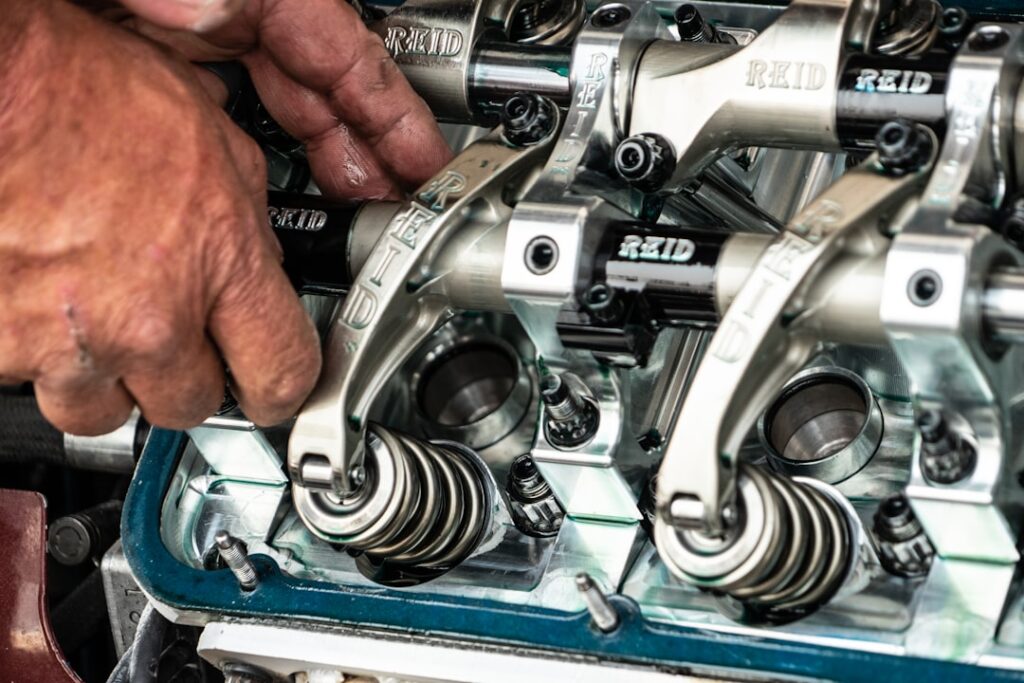
The decision between genuine OEM parts and aftermarket alternatives should be driven by component criticality, class survey requirements, warranty status, and the specific failure consequences for that component in Gulf service, not by a blanket policy that treats all parts the same. A coolant temperature sensor and a crankshaft demand entirely different sourcing logic.
When Genuine OEM Parts Are Non-Negotiable
Critical rotating and structural components should be sourced as genuine OEM or OEM-authorized remanufactured units. This includes crankshafts, connecting rods, camshafts, cylinder blocks, cylinder heads, and high-pressure fuel system components like common rail pumps and injector assemblies. For these items, material integrity, machining tolerances, and traceability documentation matter more than unit price. A substandard crankshaft or connecting rod does not just fail, it destroys surrounding components and can write off an engine block. Classification societies may also require certificates of conformity or material certificates for these components, and non-genuine parts frequently lack the documentation needed to satisfy survey requirements.
Genuine parts are also the default choice for vessels under manufacturer warranty or within extended coverage periods. Installing aftermarket components on warrantied engines can void coverage on the affected systems, and the cost savings on the part are trivial compared to a denied warranty claim on a major component.
When Aftermarket or OEM-Equivalent Makes Sense
Aftermarket and OEM-equivalent parts are viable for non-critical consumables and standard service items where the application is well-understood and the supplier can provide verified cross-reference data. Filter elements, gaskets, seals, standard fasteners, and certain bearing shells can be sourced from reputable aftermarket manufacturers without compromising reliability, provided the specifications match the OEM requirements for micron rating, material, and dimensional tolerance.
OEM-authorized remanufactured parts occupy a middle ground. Caterpillar’s Reman program, for example, returns components to factory specifications through complete disassembly, component replacement, and reassembly to current tolerances, with warranty coverage typically matching genuine new parts. For items like turbocharger cartridges, water pumps, and fuel injectors, remanufactured units offer significant cost savings while maintaining factory-calibrated performance. The decision between new genuine and remanufactured often comes down to the vessel’s position in its survey cycle and the component’s criticality classification.
The Risks of Unverified Aftermarket on Precision Components
The danger with aftermarket sourcing is not that aftermarket parts are inherently bad. It is that unverified aftermarket parts with incomplete cross-reference data can look correct but fail under operating load. An aftermarket fuel filter with an incorrect micron rating passes contamination downstream to injectors. An aftermarket bearing shell with marginal tolerance deviation wears faster under Gulf thermal loading and can spin in its housing. An aftermarket turbocharger cartridge with an unbalanced rotating group destroys itself and sends debris into the intake and exhaust systems. The qualification process for aftermarket parts must include verification of specifications, supplier traceability, and where possible, reference to operational data from comparable Gulf-service installations.
| Component Category | Genuine OEM | OEM Reman | Aftermarket / OEM-Equivalent |
|---|---|---|---|
| Crankshafts, connecting rods, camshafts | Recommended | Case by case | Not recommended |
| Cylinder heads, blocks, liners | Recommended | Acceptable with documentation | Not recommended for critical service |
| Fuel injectors, common rail pumps | Recommended | Cost-effective alternative | High risk if unverified |
| Turbocharger cartridges | Recommended | Cost-effective alternative | High risk if unverified |
| Aftercooler cores | Recommended | Limited availability | Verify materials and tube specs |
| Bearing shells (main, rod) | Recommended for survey | Acceptable | Verify material specs |
| Filter elements (fuel, oil, air) | Default for warranty | N/A | Acceptable if cross-referenced |
| Gaskets, seals, O-rings | Default for warranty | N/A | Acceptable if material-matched |
| Sensors (temp, pressure, position) | Recommended | Limited availability | Verify calibration data |
| Valves (butterfly, gate, check) | Preferred for class systems | N/A | Acceptable with material certificates |
Building a Spares Inventory Strategy for Gulf-Operated Fleets

An effective spares inventory strategy for Gulf fleets balances three competing pressures: the cost of holding stock, the cost of downtime when a part is unavailable, and the lead-time reality of sourcing from global OEM networks into UAE and Gulf ports. The goal is not to stock everything, but to stock the right things at the right readiness level for each engine brand and component criticality.
Categorize Parts by Criticality and Lead Time
Start by classifying every recurring spare parts requirement into three tiers. Tier 1 includes mission-critical components with high failure rates under Gulf conditions that would immobilize the vessel if unavailable: aftercooler cores for C18 and C32 engines, turbocharger cartridges for 3406 and 3412, fuel injector sets for MAN four-stroke auxiliaries, and all primary and secondary filter elements. These should be held as onboard stock or available for same-day or next-day delivery from a UAE-based warehouse.
Tier 2 includes scheduled overhaul components with moderate lead times: cylinder kits, bearing sets, valve seat inserts, and charge air cooler parts. These should be ordered in advance of planned maintenance windows with sufficient lead time for OEM sourcing, typically two to six weeks depending on brand and component. Tier 3 covers major components with long lead times: crankshafts, cylinder blocks, camshafts, and complete cylinder heads. These are rarely held as stock but should be pre-quoted and sourced with build-to-order lead times understood and planned against the vessel’s overhaul schedule.
Multi-Brand Fleet Consolidation
A Gulf fleet with Caterpillar 3412 main engines, Yanmar auxiliary gensets, MAN bow thruster drives, and Wartsila reduction gearboxes requires parts from four distinct OEM ecosystems. Each brand has its own parts catalog system, serial number conventions, and ordering workflow. Managing these through separate suppliers creates administrative overhead, inconsistent documentation, and freight inefficiency from multiple origin points. Consolidating multi-brand sourcing through a single UAE-based supplier with established OEM relationships across Caterpillar, MAN, Yanmar, Wartsila, and Cummins streamlines the procurement process, standardizes documentation, and reduces total freight costs through consolidated shipments.
For the Caterpillar-specific parts ecosystem, our Caterpillar spares guide covers serial number identification, Genuine vs. Reman decisions, and Gulf-condition interval adjustments across the 3406, 3412, C18, and C32 platforms.
Gulf Condition Adjustments to Standard Inventory Plans
Standard OEM inventory recommendations assume temperate operating conditions. Gulf fleets need upward adjustments to consumption rates for several component categories. Lube oil filters on Caterpillar C-series and MAN four-stroke engines may need replacement at 200 hours rather than the standard 250-hour interval, because high oil operating temperatures accelerate additive depletion and filter medium degradation. Fuel filters require closer attention due to microbial growth in warm fuel and water contamination from condensation in partially filled day tanks. Air filter elements face accelerated dust loading during Shamal conditions, particularly on vessels operating near coastal construction sites or in shallow offshore waters where fine sand is airborne.
Aftercooler cores on C18 and C32 engines deserve special inventory attention. High seawater temperatures reduce cooling efficiency while saltwater corrosion attacks tube-to-header joints. When charge air temperatures rise, thermal stress cascades into pistons, valves, and turbochargers. Stocking aftercooler core assemblies or maintaining a rapid sourcing channel for these units is essential for Gulf-based C-series fleets.
Valves and Piping Components in Gulf Service
Beyond engine spares, marine valves represent a distinct inventory category that Gulf fleet managers often overlook until a failure forces an emergency order. Butterfly valves, gate valves, and check valves in seawater cooling circuits face accelerated corrosion from high-salinity, high-temperature Gulf seawater. Material selection matters: a cast iron body may be adequate for low-temperature freshwater service, but Gulf seawater circuits often demand bronze, ductile iron, or stainless steel depending on the valve design and piping system. Butterfly valve designs are not interchangeable: wafer, lug, and flanged body types serve different installation requirements, and concentric, double-offset, and triple-offset designs serve different pressure and sealing duty. Our butterfly valve supply guide and gate valve resource cover material selection and specification matching for Gulf marine applications.
How to Vet a Marine Spares Supplier
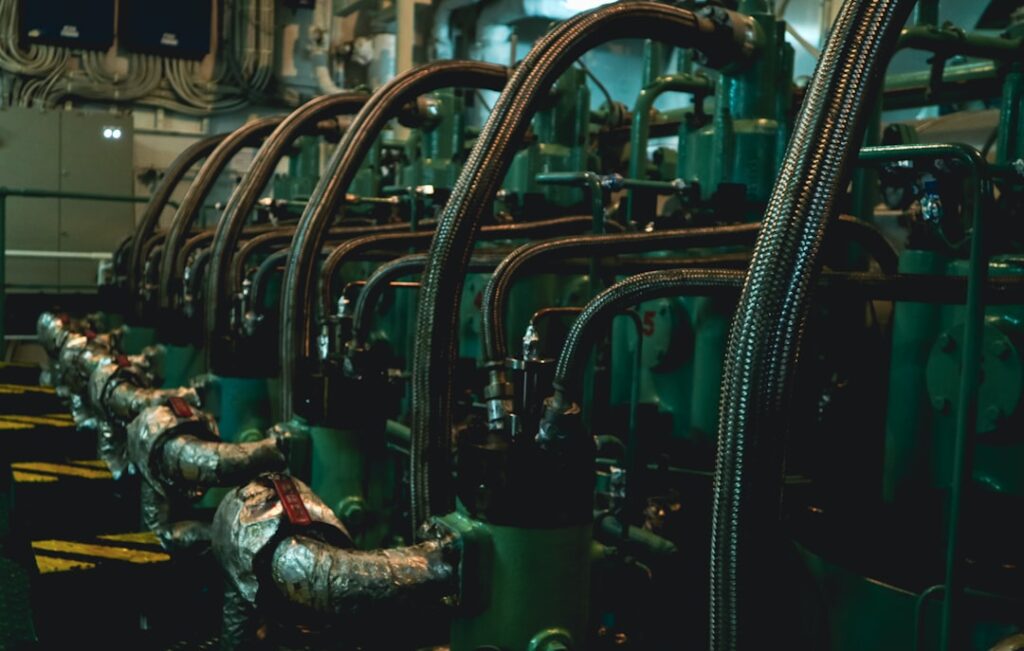
Selecting a marine spare parts supplier is a decision with direct downtime consequences. A supplier that cannot cross-reference serial numbers accurately, cannot provide documentation for class survey components, or cannot deliver to Gulf ports within operational timelines will cost more than any unit price saving they offer. The evaluation process should be systematic and tied to the specific demands of Gulf commercial fleet operations.
Technical Cross-Reference Capability
The first test of a marine spares supplier is whether they request the right information when you ask for a quotation. A supplier that quotes on an engine model name alone without asking for the serial number, arrangement number, or parts catalog reference is either cutting corners or lacks the technical depth to catch misapplication errors. A competent supplier cross-references your engine data against current OEM databases, checks for part number supersessions, and confirms compatibility before quoting. This is particularly important for legacy engines like the Caterpillar 3406 and 3412, where many original part numbers have been superseded or moved to Reman-only availability.
Documentation and Class Compliance Support
Vessels under class survey with DNV, ABS, Lloyd’s Register, or Bureau Veritas require documentation that traces parts back to the manufacturing source for critical components. A supplier should be able to provide certificates of conformity, material certificates, or manufacturer documentation for components that require them. The supplier should also understand which component categories typically require class documentation and which do not, so they are not billing you for unnecessary paperwork on consumable items while failing to provide critical certificates on major components. Confirm that the supplier can supply documentation that meets your specific class society’s requirements, as documentation standards vary between societies.
Gulf Delivery Capability and Lead Time Transparency
A UAE-based supplier with established logistics to Jebel Ali, Khalifa Port, Hamriyah Free Zone, and other major Gulf ports and shipyards offers a meaningful lead-time advantage over suppliers shipping from Europe or North America. For Tier 1 consumables, same-day or next-day delivery to a vessel alongside in a Gulf port can be the difference between a routine service event and a schedule delay. Evaluate the supplier’s actual delivery track record, not just their quoted lead times. Ask for typical delivery timelines to the specific ports your vessels use, and confirm their freight arrangements for urgent requirements.
Multi-Brand Breadth and OEM Relationships
A supplier’s brand coverage should match your fleet’s engine mix. If you run Caterpillar, MAN, Yanmar, Wartsila, and Cummins across your fleet, your supplier should have established sourcing relationships with each OEM or their authorized distribution networks. Multi-brand capability reduces the number of purchase orders, standardizes documentation, and allows consolidated freight on a single shipment rather than multiple partial shipments from different origin points. Verify that the supplier’s multi-brand claims are backed by demonstrable sourcing channels, not just a catalog listing.
Counterfeit and Non-Genuine Part Detection
Counterfeit parts are a real risk in the marine aftermarket, particularly for high-value two-stroke components like piston crowns, cylinder liners, and exhaust valve spindles. Genuine OEM parts carry specific marking conventions, consistent part number stamps, and traceability documentation. A supplier should be able to provide a traceable supply chain back to the OEM or an authorized manufacturing partner. Signs of non-genuine parts include inconsistent machining finish, absence of manufacturer markings, documentation that does not match the physical component, and pricing significantly below market rates. A supplier that cannot answer traceability questions clearly should be treated with caution, regardless of how attractive their pricing appears.
Frequently Asked Questions
The following questions address the most common sourcing decisions faced by fleet managers and chief engineers operating Gulf-based commercial vessels. For brand-specific technical detail, refer to the linked guides throughout this article.
What information do I need to order marine spare parts accurately? You need the engine serial number and arrangement number (for Caterpillar) or the engine type designation and serial number (for MAN, Wartsila, Yanmar, and Cummins), plus the specific part number from the parts catalog or build report. For two-stroke MAN engines, the build report is essential for high-value components like cylinder liners and piston crowns.
How do Gulf operating conditions affect spare parts consumption rates? High ambient temperatures (45 degrees Celsius and above), warm seawater, salt spray, Shamal dust, and variable fuel quality accelerate wear on filters, aftercoolers, turbochargers, bearings, and fuel system components. Standard OEM service intervals should be shortened, and Tier 1 consumable stock levels should be increased relative to temperate-climate baselines.
When should I choose OEM Reman parts over new genuine parts? Reman parts are cost-effective alternatives for components like turbocharger cartridges, water pumps, fuel injectors, and cylinder heads. They are remanufactured to factory tolerances and typically carry the same warranty as new genuine parts. The decision depends on component criticality, the vessel’s survey cycle, and class documentation requirements.
Can a single supplier cover all the engine brands in my fleet? Yes, if the supplier has established sourcing relationships across each OEM in your fleet mix. Multi-brand consolidation reduces purchase order volume, standardizes documentation, and lowers freight costs through consolidated shipments. Verify that the supplier’s brand coverage is backed by demonstrable OEM sourcing channels, not just catalog listings.
How do I verify that a marine spare part is genuine and not counterfeit? Genuine parts carry consistent manufacturer markings, part number stamps with correct font and depth, and traceability documentation. Request a traceable supply chain back to the OEM or an authorized partner. Signs of non-genuine parts include inconsistent machining, missing markings, documentation mismatches, and pricing significantly below market rates.
Request a Quotation for Genuine Marine Spares
Effective marine spare parts sourcing for Gulf fleets comes down to three disciplines: accurate engine identification using serial numbers and arrangement numbers, a criticality-based genuine vs. aftermarket decision framework, and a consolidated supplier relationship with the technical depth and Gulf delivery capability to keep your vessels operating. Getting any of these wrong turns a routine maintenance event into a schedule delay, a charter penalty, or an unplanned alongside period.
zeemacgroup.com brings decades of experience supporting Gulf commercial fleets with genuine and OEM-authorized marine spare parts across Caterpillar, MAN, Yanmar, Wartsila, Cummins, and other major brands. Our technical team cross-references your engine serial numbers and arrangement numbers against current OEM databases to confirm exact part compatibility, checks for supersessions, and provides stock availability and lead-time information before quoting. We deliver to Jebel Ali, Khalifa Port, Hamriyah Free Zone, and all major Gulf ports and shipyards.
Send your engine serial numbers, arrangement numbers, and part requirements for a same-day technical cross-reference and quotation. Include the vessel’s ETA at the delivery port for urgent requirements, and our marine spares team will confirm stock availability, lead time, and pricing within one business day.
Frequently Asked Questions
What information do I need to order marine spare parts accurately?
You need the engine serial number and arrangement number (for Caterpillar) or the engine type designation and serial number (for MAN, Wartsila, Yanmar, and Cummins), plus the specific part number from the parts catalog or build report. For two-stroke MAN engines, the build report is essential for high-value components like cylinder liners and piston crowns.
How do Gulf operating conditions affect spare parts consumption rates?
High ambient temperatures (45 degrees Celsius and above), warm seawater, salt spray, Shamal dust, and variable fuel quality accelerate wear on filters, aftercoolers, turbochargers, bearings, and fuel system components. Standard OEM service intervals should be shortened, and Tier 1 consumable stock levels should be increased relative to temperate-climate baselines.
When should I choose OEM Reman parts over new genuine parts?
Reman parts are cost-effective alternatives for components like turbocharger cartridges, water pumps, fuel injectors, and cylinder heads. They are remanufactured to factory tolerances and typically carry the same warranty as new genuine parts. The decision depends on component criticality, the vessel’s survey cycle, and class documentation requirements.
Can a single supplier cover all the engine brands in my fleet?
Yes, if the supplier has established sourcing relationships across each OEM in your fleet mix. Multi-brand consolidation reduces purchase order volume, standardizes documentation, and lowers freight costs through consolidated shipments. Verify that the supplier’s brand coverage is backed by demonstrable OEM sourcing channels, not just catalog listings.
How do I verify that a marine spare part is genuine and not counterfeit?
Genuine parts carry consistent manufacturer markings, part number stamps with correct font and depth, and traceability documentation. Request a traceable supply chain back to the OEM or an authorized partner. Signs of non-genuine parts include inconsistent machining, missing markings, documentation mismatches, and pricing significantly below market rates.